
It’s 8 am. Madiha is prepping to teach her class of twenty-five 4th graders. She teaches primary at a renowned private school in Karachi. But something is different about her class today – it’s not at the school campus, nor is it in a regular physical classroom with pupils sitting at their desks.
Although her school closed following government instructions over coronavirus fears, learning hasn’t stopped. The institution has continued all classes online using digital classrooms, as have some others in major Pakistani cities.
The platform Madiha’s school is using for junior classes is Google classroom; for higher grade levels, it uses Zoom. Earlier, they used Edomo but later made the switch; mainly due to some advantages. Other digital learning platforms currently being tested by Pakistani institutions also include Hangouts, Facebook live, and even WhatsApp messenger.
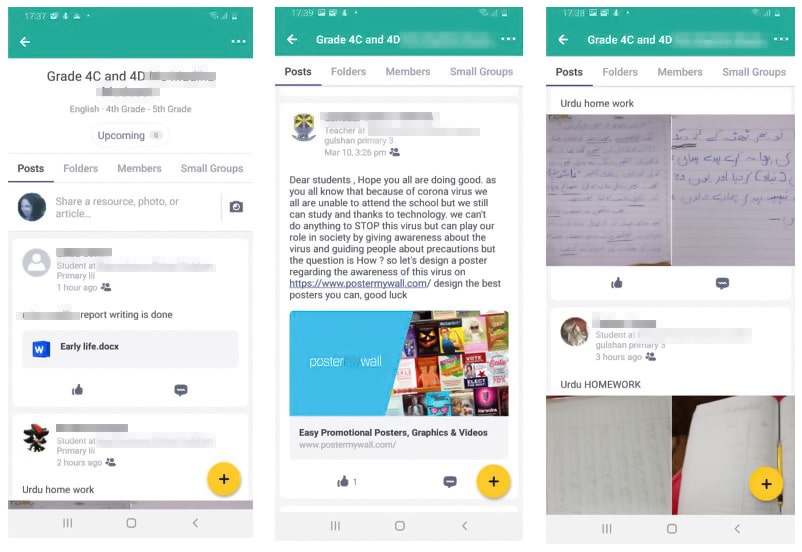
For Madiha and her colleagues, it did take some time to get the hang of the new platform and its tools. But after some days of hands-on use, they’re coming in handy and proving as effective as conventional teaching.
One of the benefits of online tutoring for Madiha includes being able to take the class straight from the comfort of her home while caring for her toddler.
A direct advantage of digital classes for her and all other teaching staff and students is that they will be lowering their risk of falling victim to the coronavirus that’s wreaking havoc on societies and economies the world over.
With social distancing being termed as a potent weapon against the virus spread, online education is keeping Madiha and many others safe amid an unstoppable outbreak.
The Trend Catches On
Following the countrywide shutdown of academic institutions to curb the spread of COVID-19 pandemic, many varsities in Pakistan – including NED University, Habib University, and Iqra University – have also announced they will be holding their classes online.
Karachi University’s Public Administration Department set the trend when it announced last week that classes will resume online.
While the use of online classrooms sees a surge, the digital form of classes remains a privilege that only a handful of upscale private schools and their students can enjoy as millions others sit idle at homes amid academic shutdown.
Plus, the online classes still remain largely untested and new to many, with parents yet to get familiarized with it and teachers trained for digital classes.
Online Education Still a Privilege
There has been no dearth of talks when it comes to the improvement of Pakistan’s public education landscape. There have also been endless discussions on the importance of digitalization in the country and the ambition of Digital Pakistan. All this to little or no avail so far.
Today, the country is pursuing its Digital Pakistan initiative that is aimed at introducing the latest technology for public welfare. Although digital skill & literacy is one of the initiative’s key pillars alongside access & connectivity, digital infrastructure, and innovation & entrepreneurship, it’s unclear if and how the program will address digitalization of public education and help the introduction of online instruction.
Of the steps taken in that direction is the Higher Education Commission’s ‘Smart Education’ program that aims to transform universities in Pakistan into ‘Smart Universities’. Through laptops, Information & Communication Technology (ICT)-powered learning, and blanket on-campus WiFi coverage, the program aims to reinvent higher education in Pakistan.
Other digital education programs in Pakistan include Jazz Smart Schools Project (SSP) and TeleTaleem aiming to promote ‘blended learning’ using digital & online media, and utilize ICT to connect users with quality learning opportunities, respectively.
When and how such programs will begin to bear fruit and be of any practical use especially in a crisis situation like we’re in today is anybody’s guess.
Expensive Access to Technology
While the country’s renewed focus on digitalization is worthy of praise, the very problem of expensive digital access remains overlooked. While 78% of Pakistanis have a mobile phone, mobile internet penetration is still stuck at a mere 35%.
What holds back people’s digital penetration in Pakistan has already been the subject of umpteen discussions on multiple platforms only for the raised concerns to go unheeded.
Heavy taxes, import duties, and new device registration protocols continue to make Smartphones and other smart devices inaccessible for the masses whose digital and financial inclusion is high on the government’s agenda.
Since internet connectivity is where all inclusion begins in today’s increasingly digital world, easing a common man’s access to it is the only way any of the national digitalization dreams can materialize.
The same holds true for digital education too. E-Learning methods involve video instruction, heavy media files, and frequent uploads of a variety of educational materials that require high, uninterrupted data speeds besides supporting devices.
While a limited number of students from some private-sector institutions benefit from digital learning, the ability of the vast majority of government school students to take advantage of the same appears nowhere in sight, at least for the foreseeable future. Only some drastic, decisive measures on making technology affordable for the masses can change that bitter fact.
Learnings for the Future
Today, we’re witnessing educational institutions in Pakistan scrambling to shift their classes online amid the coronavirus outbreak. The same goes for workplaces, shopping centers, retailers, and other businesses.
The lesson for us all from this sad episode should be to ramp up our digital capabilities so we’re ready to teach, study, work, and purchase online whenever the need arises. We can turn this challenge into an opportunity by modernizing our processes and reaching a significant digitalization milestone sooner than we would under normal circumstances.
It may be the first time that the private sector is experimenting with large-scale remote teaching and working in Pakistan and other parts of the world. Our goal should be to digitally empower the public sector academic institutions and workplaces too so they can also enjoy the perks that technology has to offer.